

Carnival Vocabulary
08 Feb, 2013
By Luana Cavalcanti
It’s carnival time in Brazil and since the vocabulary theme of the week is related to the recent news and events, carnaval is in the agenda this week. In order to understand the vocabulary, let’s read a text about carnival in Brazil, every word in Italic is later explained in the vocabulary: Brazilian Carnival is one of the largest celebrations on the planet and is not just about Rio de Janeiro. Carnival is celebrated, in different styles, throughout Brazil. There are large-scale events in Salvador, Recife and Olinda, all of which attract thousands of visitors.
In the cities of Rio and São Paulo various
samba schools (escolas de samba)
compete in an organised parade
(desfile)
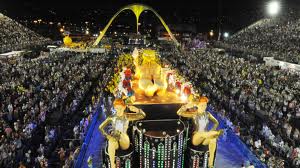
in the Sambódromo. Each school presents a different theme, which they expose through their costumes, dance, music and the
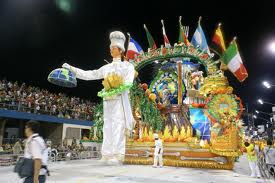
“carros alegóricos”
(huge vehicles decorated according to the theme designed specifically for the parade).In both cities the main musical rhythm played is samba.
During carnival time groups of people and carnival organised groups called blocos parade the streets with many of the revellers
(foliões)
wearing costumes
(fantasia)
.
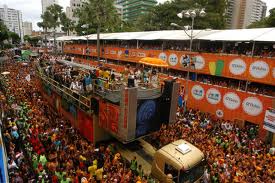
In the Northeast of Brazil is held the biggest carnival in the world, in the city of Salvador,the trio elétrico– a large truck, adapted with giant speakers and a stage on top where musicians and singers perform to the entertain the thousands dwellers
(foliões)
who follow the truck in the streets of the city.In Salvador the main musical rhythm played is axé.
Carnival is celebrated in all over Brazil and many clubs in small towns organise a carnival ball
(baile de carnaval).
One music styles played in this type of party is called marchinha de carnival.
Recife and Olinda located in the state of Pernambuco,are carnival hot spots for Brazilians from all over the country. In Recife, many musical concerts are organised in the city centre. In Olinda, the party takes place in the colourful, house-lined, sloping streets of the city. At night the streets of Olinda are filled with music and the colour of the many carnival organized groups (blocos).
In Pernambuco the main rhythms played in the balls
(bailes)
and parades
(desfiles)
are frevo and maracatu . Galo da Madrugada is the biggest carnival parade in the world, when you consider the number of participants, according The Guinness Book of World Records.
Examples
PT- Os foliões são peças importantes no carnaval de Salvador.
EN- Carnival revellers play an important role in the carnival of Salvador.

PT- A minha fantasia de carnaval foi inspirada na Frida Kahlo.
EN- My carnival costume was inspired in Frida Khalo.

PT: A minha escola de samba favorita é a Beija Flor de Ninópolis.
EN: My favorite samba school is Beija Flor de Ninópolis.
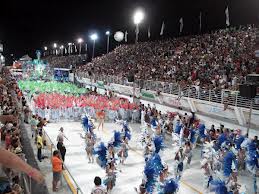
PT: A cabeleira do Zezé é a marchinha de carnaval que mais gosto.
EN: Cabeleira do Zezé it’s the classical samba song that I like it most.
http://youtu.be/j99bk-5l4uY
PT: O carro alegórico da escola de samba.
EN: The carnival float of the samba school.
PT: O desfile das escola de samba do Rio de Janeiro.
EN: The samba school parade of Rio de Janeiro.
Trio Elétrico: I only posted a picture because there is no translation in English.
PT: O baile de carnaval foi muito bom!
EN: The carnival ball was very good!

Learn more about: Marchinhas
Great Carnival Marchinhas on about.com
About the author

Culturart Brazil
Culturart Brazil promotes Brazilian Art, Culture, Education & Events in London/UK through our Website, Brazilian Events Guide, Newsletter and Social Media.








 Abrir News